Where do I even start? Japan was incredible, and we were fortunate to have two weeks to explore the country together at one of the most beautiful times of the year. We witnessed cherry blossoms in full bloom, ate delicious food everywhere we went, and experienced awe-inspiring scenery and architecture.
We arrived in Japan on March 30th and departed on April 13th to catch peak cherry blossom season, but they bloomed particularly early this year. We started our trip in Osaka rather than Tokyo, and I’m glad we did because Osaka had peak blossoms for us when we arrived. By the time we made it to Tokyo at the end of the trip, most of the cherry blossoms had finished blooming.
We chose Japan as our first post-COVID international trip because we’ve always been interested in its culture and scenery, and we wanted to experience Eastern Asian culture instead of Western Europe for a change of pace. We were not disappointed!
Top Tips:
- Research the Japan Rail (JR) Pass to determine if the cost is worthwhile for your trip. If you are planning a trip that utilizes the cross-country bullet train only once or twice, it’s probably not worth the cost for an entire JR Pass. I like this JR Pass calculator, where you can add your one-way and round-trip train rides, and it will tell you when the JR Pass could be worth it.
- If you plan to use inner-city transit or even short train rides, I would absolutely recommend grabbing a Welcome Suica card. This website has great information about the Suica card. It eliminates the need to go to ticket machines to purchase a ticket every time you want to take transit. You just add yen to the Suica card, tap it when boarding or leaving (some trains are different), and it deducts the fare amount from the card. Very easy and convenient to use.
- Rent a pocket Wi-Fi device to pick up at the airport when you arrive. It cost about $80 for two weeks for the device, and it was well worth it. We put our phones on airplane mode the entire trip and just used Wi-Fi from the device and hotels to map transit routes, send messages, translate, and more.
- Most tourist sights close at 5 or 5:30pm (temples, shrines, gardens, etc.) local time, so plan your day accordingly. Restaurants also generally close quite early outside of Tokyo, so if you are planning to sightsee until 5 or 6pm then grab dinner, you might be out of luck without going significantly out of your way. I share an experience below of dinner in Nara.
- Handy items to pack or consider on your trip: a portable power bank to charge phones or the pocket Wi-Fi device on the go, a light rain-repellant jacket that can fold up to conserve space, a light packable backpack, sunscreen, bug repellant, and a small umbrella.
- Invest in the most comfortable and durable walking shoes you can afford. We walked 15,000-20,000 steps every day in Japan for two weeks, and it was tough. Don’t skimp on your shoes.
- I would recommend keeping at least 10,000 yen cash on you. There are easily accessible ATMs in convenience stores like 7-Eleven and Family Mart, but you may run into situations where payment is unexpectedly cash only (souvenirs, food, taxis).
Osaka, March 30 – April 1
We flew into Tokyo Haneda (HND) airport through Delta and then took a local Japanese airline, Japan Airlines, for the short jaunt to Osaka to start our trip. The flight from Tokyo to Osaka Itami was only $75 per person and took about an hour. Once we landed in Osaka, we picked up our luggage and went outside to catch the transfer bus from the airport to Namba station.
We stayed in Osaka for three nights at Swissotel Nankai Osaka. The room was great, and the hotel staff was friendly and helpful. The worst part about this hotel was actually finding the entrance. We walked around the perimeter along the street for a while (at about 10pm after traveling for 24 hours) and then realized we needed to enter the hotel from within another building. Even still, the entrance we found was a really weird random back hallway inside the train station and not the main entrance. We enjoyed our time at Swissotel once we finally found it.
On our first day, we took our time wandering in the morning and acclimating to how transit works and getting around. Due to time constraints, we couldn’t exchange our JR Pass vouchers at the Tokyo airport, prompting us to navigate to Osaka station on the first day to collect our passes. The transit stations are really cool in Japan and usually have a lot of food and shops. We found a tasty pastry shop and then walked to our first real tourist stop – Osaka Tenmangu shrine (1.8km). We had our first encounter with cherry blossoms and witnessed locals and tourists paying their respects at shrines and temples.
We walked to Osaka Castle (2.6km) and enjoyed the park and grounds outside. The line to enter was really long, and honestly, we were happy to appreciate the view from outside. Near Osaka Castle was Hokoku shrine. This shrine wasn’t particularly significant except for the fact that we picked up our goshuinchos here. A goshuincho is a book that you can fill with stamps, sometimes hand-drawn in real-time by monks, at each shrine you visit. It’s probably our most meaningful keepsake from Japan, should you decide to fill one.
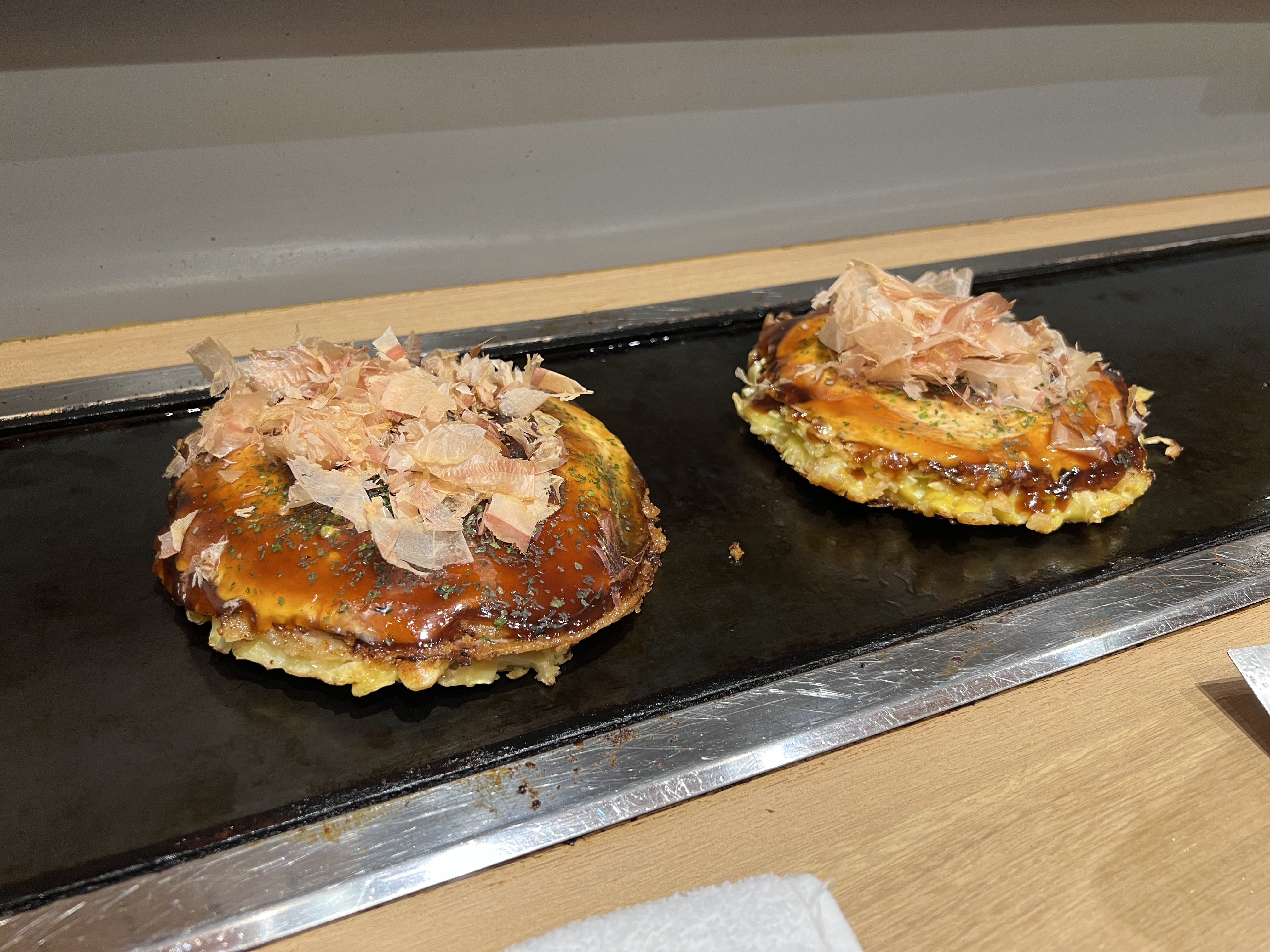
At night, we went to Dotonbori, the most popular area of Osaka. We were lucky to get into a busy restaurant for dinner, and we had the most amazing okonomiyaki. My husband ordered shrimp and scallops; I had pork okonomiyaki. 10/10 recommend Okonomiyaki Sakaba O. After dinner, we saw the infamous running man sign (Glico) and enjoyed the Dotonbori nightlife. It was hopping on a Friday night, and it was exciting to be among the crowds.
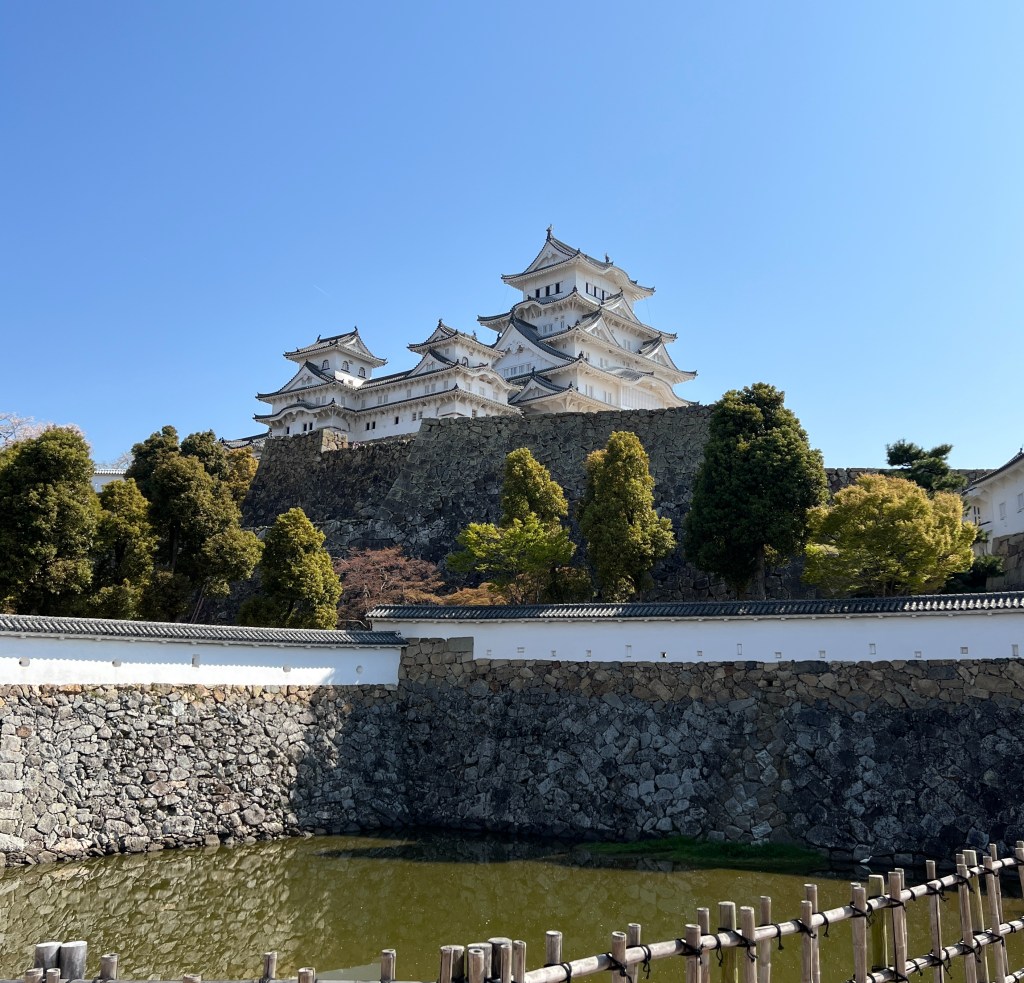
The next day, we took the bullet train on a short ride to Himeji. Himeji Castle was one of my favorite sights of the entire trip. It was nothing short of magical. Himeji Castle stands as one of the country’s remaining 12 original castles. We knew we had to get there early because they allow visitors to enter at 9am, and only a limited number of entrance tickets are sold per day. We were in line by 9:30am and had to wait about 25 minutes to enter. But I swear the day we went was the absolute peak sakura day for the park and castle area. It was breathtaking. It is worth taking your time around the castle grounds to explore. We walked through the west bailey before going into the castle, which served as a residence for a princess and was used to protect the castle from intruders. The castle is six stories high, and you climb a series of narrow staircases to the top floor to look out over the surrounding area. In hindsight, I’d head straight to the castle upon arrival next time, as it got overwhelmingly crowded later on. The architecture, both inside and outside the castle, is impressive, and the views from the top are worth pushing through the crowds. 10/10 recommend Himeji Castle.

Koyasan, April 2
The next day, we journeyed to the countryside to see another version of Japan, and what a journey it was! We forwarded our large luggage bags to Kyoto, our next big city destination, so we didn’t have to bring them. Luggage forwarding is affordable and convenient; I would recommend it.
We purchased the Koyasan World Heritage ticket and boarded the Nankai Railway train. Then we transferred to the Koyasan cable car to take us up the mountain. Then we got on a bus and rode it into Koyasan. Koyasan is an extremely small mountain town with no actual hotels, so lodging is provided by temples (shukubo) to visitors.
We arrived in town at 11am and couldn’t officially check in to the shukubo until 4pm, so we dropped our bags off and started walking through the town. Kongobuji temple was the first stop on our wanderings through Koyasan. It was originally constructed in 1593 by Toyotomi Hideyoshi. The rooms were separated by beautiful doors adorned with cranes, flowers, trees, and more. The largest rock garden in Japan, Banryutei Rock Garden, is found here. The rocks represent a pair of dragons emerging from the clouds.
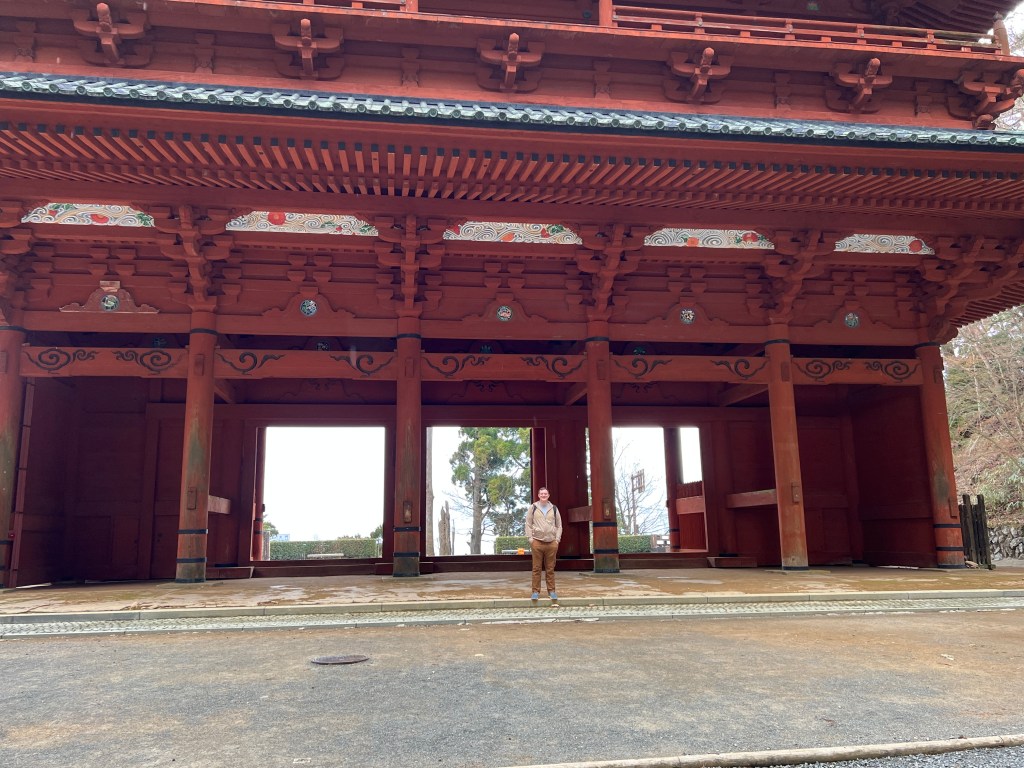
Next, we walked to Garan, where a HUGE pagoda (Daito Pagoda) rests on the grounds. There were very few people when we were there. It felt like we had the place to ourselves. We observed a group of monks ring a large bell on the hour by pulling a log and letting it drop. We continued walking through town toward Daimon Gate. I already used “huge” in all caps to describe the pagoda, but I have to use it here, too. Daimon Gate is HUGE!!! It represents the historic main entrance into Koyasan and was first built in the 12th century.

Koyasan essentially shuts down at 5pm. We stayed at shukubo Fumon-in, and they closed the main gate at 5pm and served dinner at 5:30pm. If you wanted to leave the premises after 5, you would have to use a back door, and that door locked at 9pm. However, unless you just want to walk around at dark, nothing is open in town after 5pm.
Our night in Koyasan was actually a bit of a rest: we checked in at 4pm and relaxed for an hour, ate dinner (all vegetarian meal), then went to bed early. While we were eating dinner, the monks prepared our room for bed by laying out small cushions on the tatami mat floor with a blanket. It was an unforgettable experience, and I’m glad we did it, but sleeping on the floor was tough. It felt like we truly experienced Japanese culture, though, and that was really cool. Also, the bathhouse is shared, separated for males and females, but that felt like a truly Asian experience, too. My husband didn’t use the bathhouse, but I did. When in Rome, right?
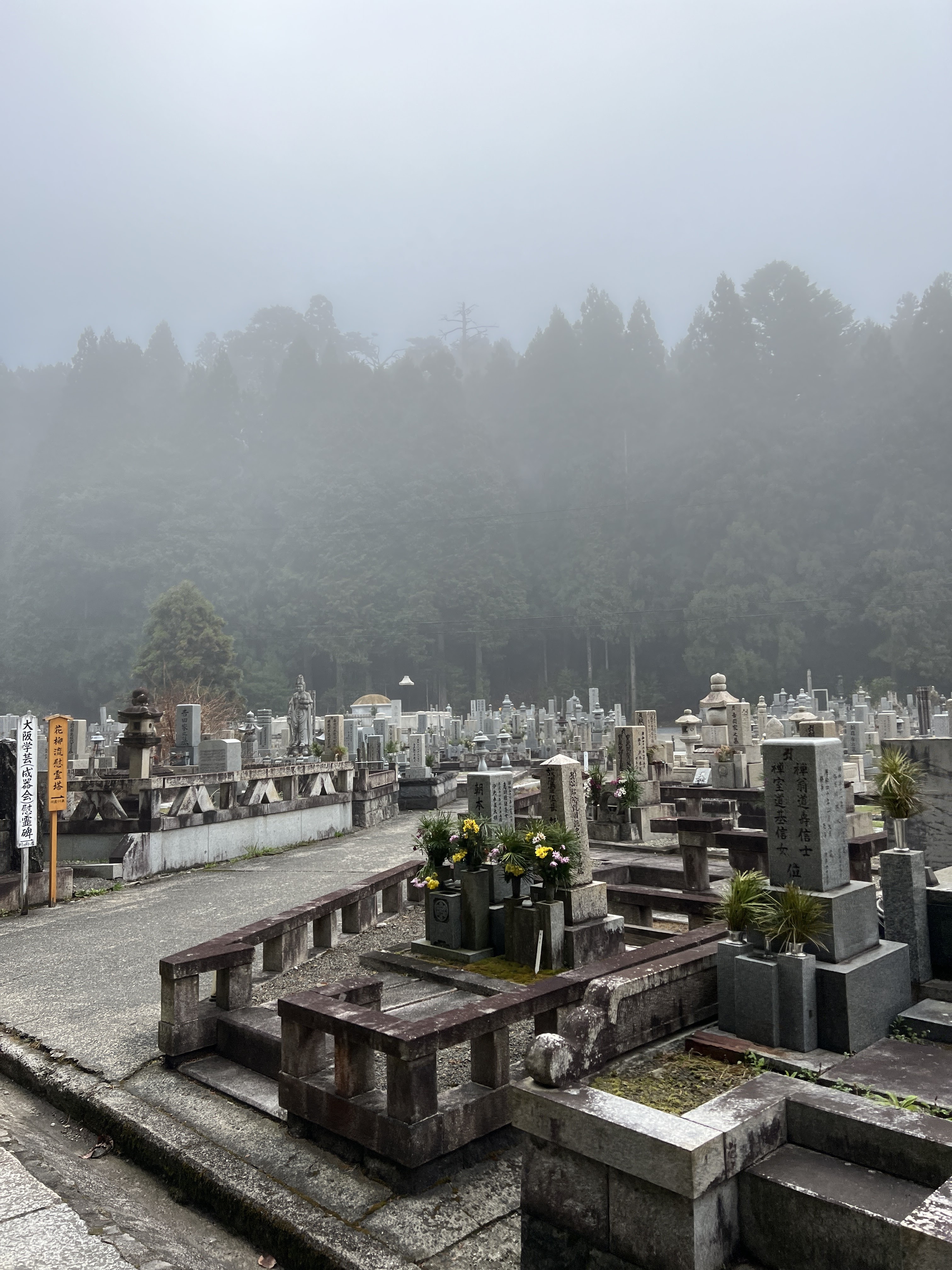
We started the next morning early and observed the monk’s ceremony at 6:30 at our shukubo. It was very peaceful and impressive to hear their chanting and see their level of dedication. We took the bus to our main reason for traveling all the way to Koyasan – Okunoin Cemetery. We arrived just before 8am, and a heavy fog settled into the cemetery. It was only us there, save for maybe five others. It was a once-in-a-lifetime experience to feel the peace, calm, and reverence of the cemetery essentially by ourselves. It is believed that Kobo Daishi, the founder of Shingon Buddhism, is resting in eternal meditation in the mausoleum at the back of the cemetery. It’s difficult to explain the experience fully, but it is one I will cherish forever.
Nara, April 3
From Koyasan, we traveled to Nara. Many people recommend Nara as a day trip, and after our time there, I would now recommend it as a day trip from Kyoto as well. It would be a long day trip, but it’s more efficient that way, and a day was enough time there for us. We took the train to the JR Nara station and walked a few blocks to the Airbnb we rented for the night. Our Airbnb host was so kind, and we had a great stay at her place.
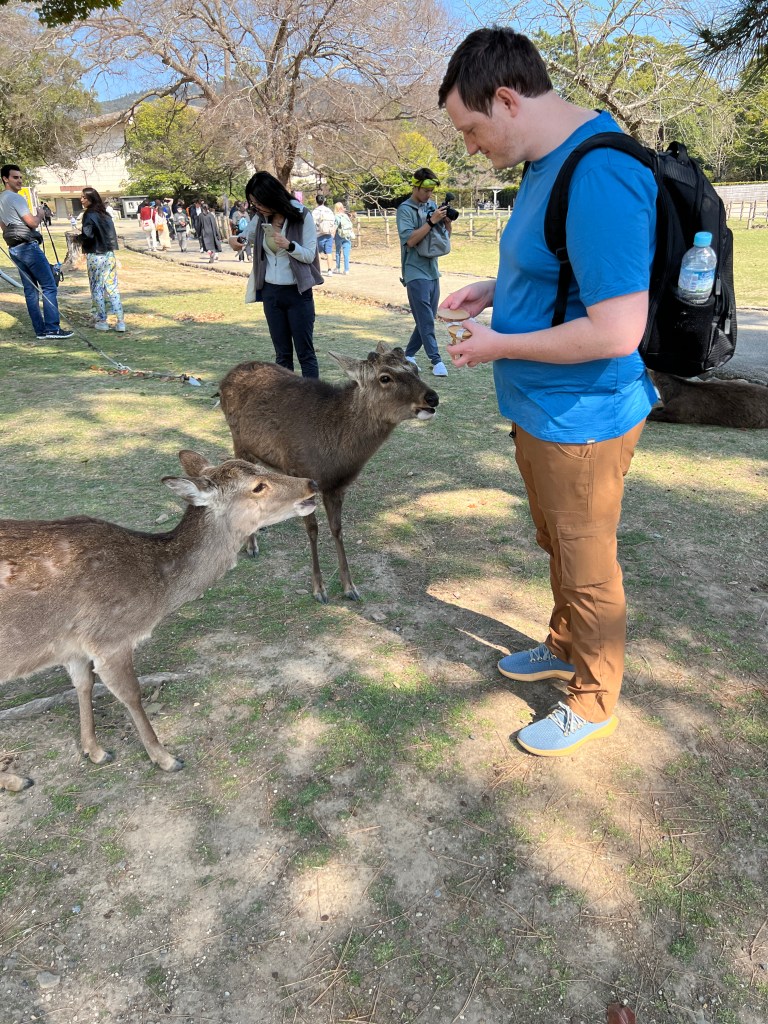
My main goal of visiting Nara was Nara Park, so that is where we headed. I love animals, and I can’t stress enough how much I loved feeding shika senbei (crackers) to the wild deer in Nara Park. I would have sat there from sunrise to sunset, feeding them biscuits. There isn’t really anything else to do in Nara Park besides buy crackers and feed deer, but it is a pleasant outdoor area to relax for a while. There are several stands throughout the park to buy crackers for the deer. We even saw a deer standing behind the small counter begging the seller for cracker pieces. One more side note about the deer because I adore them – many have learned to bow to you to request a cracker. It was one of the cutest things I’ve ever seen.
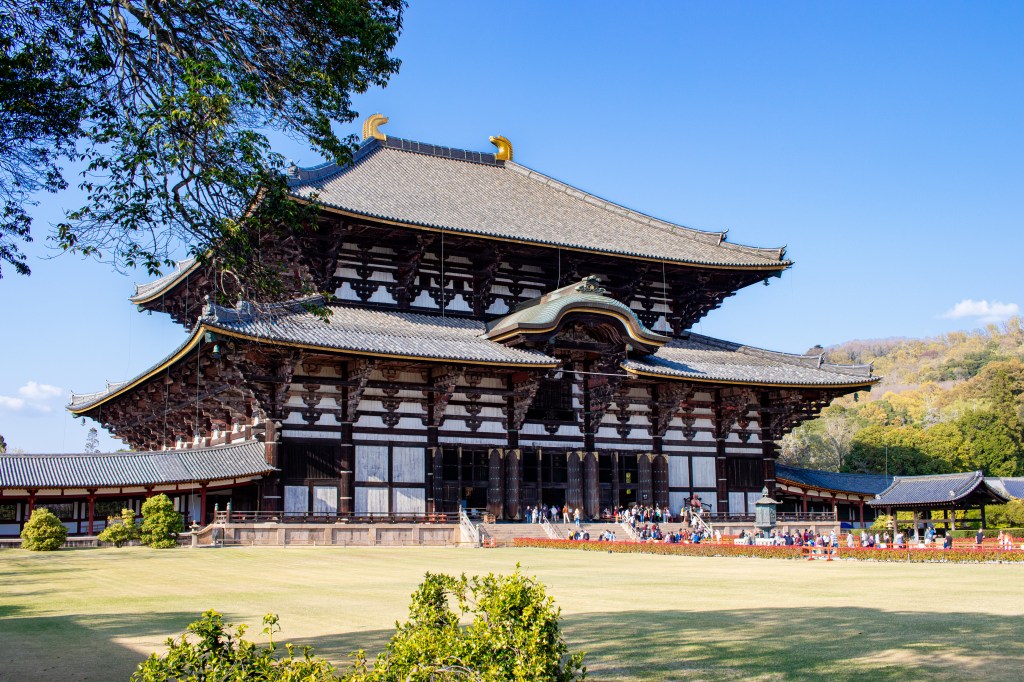
Then we walked to Todaiji Temple, one of the most famous and historically significant temples in Japan. The temple was constructed in 752 and, until recently, held the title of the world’s largest wooden building. It was truly magnificent to see the stature of the building, the beautiful grounds surrounding it, and the attention to detail both inside and outside. It houses one of the largest bronze statues of Buddha in Japan. If you’re in Nara, be sure to stop at Todaiji.
We finished up our sightseeing around 5:30pm and had difficulty finding a bus stop to take us toward the Airbnb. I think we ended up walking and decided to try the restaurant around the corner that was recommended by the host. We walked to the restaurant, and they had a sign that they had to close that evening unexpectedly. Our next problem was that there wasn’t much else nearby, and I was completely spent. We walked to a pizza shop another block over, and they stopped us at the door and said they were too busy to accept more customers. They said we could come back in an hour to see if they could take us then. We decided that was our best option, went back in an hour, and they nearly turned us away again, but I think they took pity on us because I was basically crawling in the door at that point. The other unfortunate aspect was that it was Monday, and a lot of businesses are closed on Mondays in Japan. I think we just ran into a series of unfortunate events, but it was a difficult evening.
Kyoto, April 4-7
We took the JR train from Nara to Kyoto and taxiied to our hotel to leave our bags and wander the neighborhood. Our hotel in Kyoto was my favorite of the trip – The Machiya Ebisuya. The room was really spacious, the air conditioning worked great, there was a washer/dryer combo in the room, and it was well-located for us. No matter where you stay in Kyoto, you’re likely going to have to travel a decent distance to get to everything you want to see because it’s rather spread out.
Kyoto put everything we wanted to see on the top of a mountain. We walked to the Gion district (1.5km) and did some shopping. Yasaka shrine (0.2km) was located between Gion district and Higashiyama district and was an easy stop while we were in the area. We headed to Kiyomizu-dera Temple (1.2km), and the street leading to it was lined with shops on both sides. The street is very busy, as Kiyomizu-dera is one of the most popular tourist sights in Kyoto. It was really cool to be on the bustling street and see the temple on the side of the mountain with trees surrounding it. I would recommend visiting Kiyomizu-dera.

The next day we went to Fushimi Inari Shrine. It’s famous for its thousands of torii gates leading through a wooded forest to Mount Inari. The shrine has ancient origins, predating the capital’s move to Kyoto in 794. Foxes are thought to be Inari’s messengers, so there are fox statues all over the grounds of Fushimi Inari. There is a large gate at the entrance as you navigate to the hiking trail up the mountain. There are a couple opportunities to stop and turn around if you have seen enough. The beginning is rather flat and an easy walk, and then you have an opportunity to circle around back to the entrance or continue on in a more strenuous hike to roughly the halfway point up the mountain. The halfway point is a crowded area that provides great views and benches. I had a personal goal to make it to the summit, so that’s what we did. After a slight wrong turn and accidentally walking completely off the mountain on this weird side path, we climbed back up the mountain and then took the right way to the summit. I really enjoyed Fushimi Inari, and I felt proud that we hiked to the summit!

Later that day, we visited Ginkakuji, also known as the Silver Pavilion. However, we arrived just before closing time and had to hurry through the circular route that led us around the exquisite buildings and grounds. Later, we strolled along the Philosopher’s Path and discovered a charming café for dinner, which we barely made it to before they closed. After that, we headed back to the Gion district and enjoyed some nightlife while doing some more shopping and exploring the area.
We started our day early and headed to Arashiyama, just outside Kyoto. The area was incredibly scenic and peaceful. Our first stop was the monkey park situated at the top of a mountain. The day was extremely humid, and we had to hike up a series of switchbacks to reach the top, but seeing the wild monkeys there made it all worth it. We saw both adult and baby monkeys and even witnessed a mother nursing her very tiny baby. It was adorable to watch them play and run around. The park also had a small building where we could feed the monkeys through a metal barrier. Our favorite monkey was one that was sitting near an employee outside, watching him. He would wait for the employee to walk away from his stand and then run up to his cabinet and steal some snacks before he returned. The monkey had a perfectly innocent look on his face, which was so cute to see.
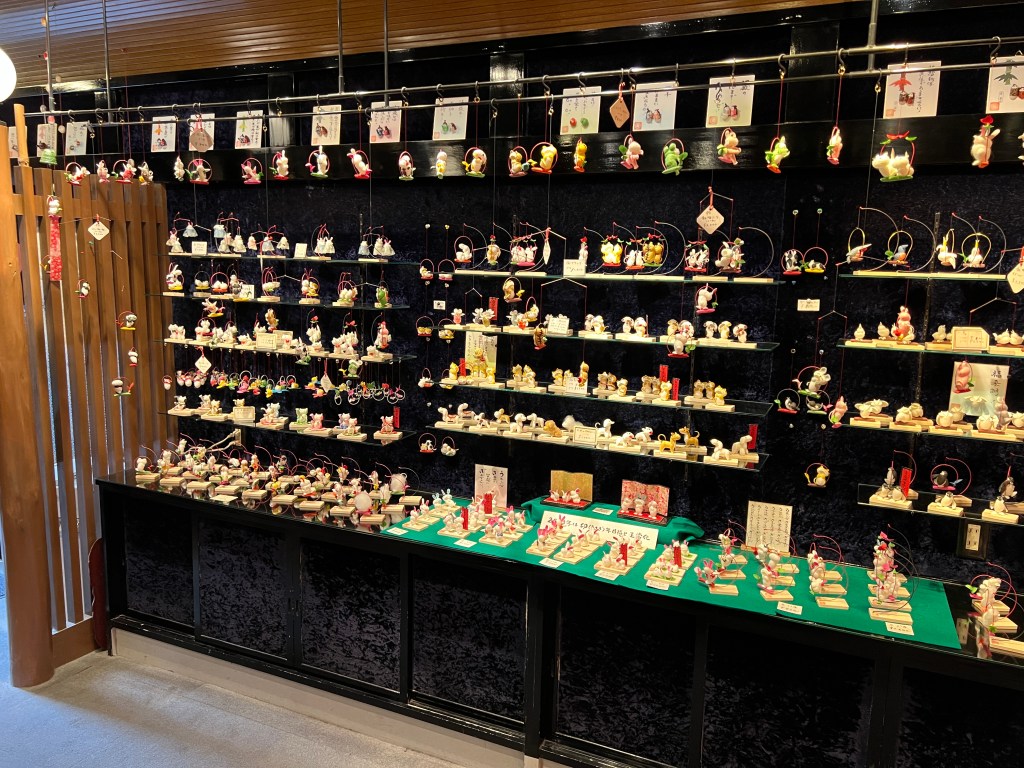
We strolled along the bustling main street of Arashiyama, which was packed with shops and food. I had a favorite store that was set back from the street and easy to miss. All that was visible from the street was a stone path. However, my husband was curious about the store, so we decided to take a closer look. Inside, we found a small elderly woman behind the counter, engrossed in something in her hands. The walls were covered with tiny handmade creatures such as dogs, cats, chickens, pandas, fish, and more. She directed our attention to a book that she kept by the counter that displayed a picture of a silkworm. She informed us that everything in the store was made by her from silkworm cocoons. I immediately fell in love with this charming shop – the little elderly woman, her meticulous attention to detail in her crafts, and the shelves filled with adorable animals. It felt like we had entered a tiny corner of her world, and I felt incredibly fortunate to be there. I will cherish the memory of her and her shop forever.
We quickly visited Tenryuji Temple and enjoyed the peace and calm sitting in the gardens. Our next quick stop was the bamboo forest. We walked in for a few minutes, but my feet were killing me, so we didn’t walk all the way through.
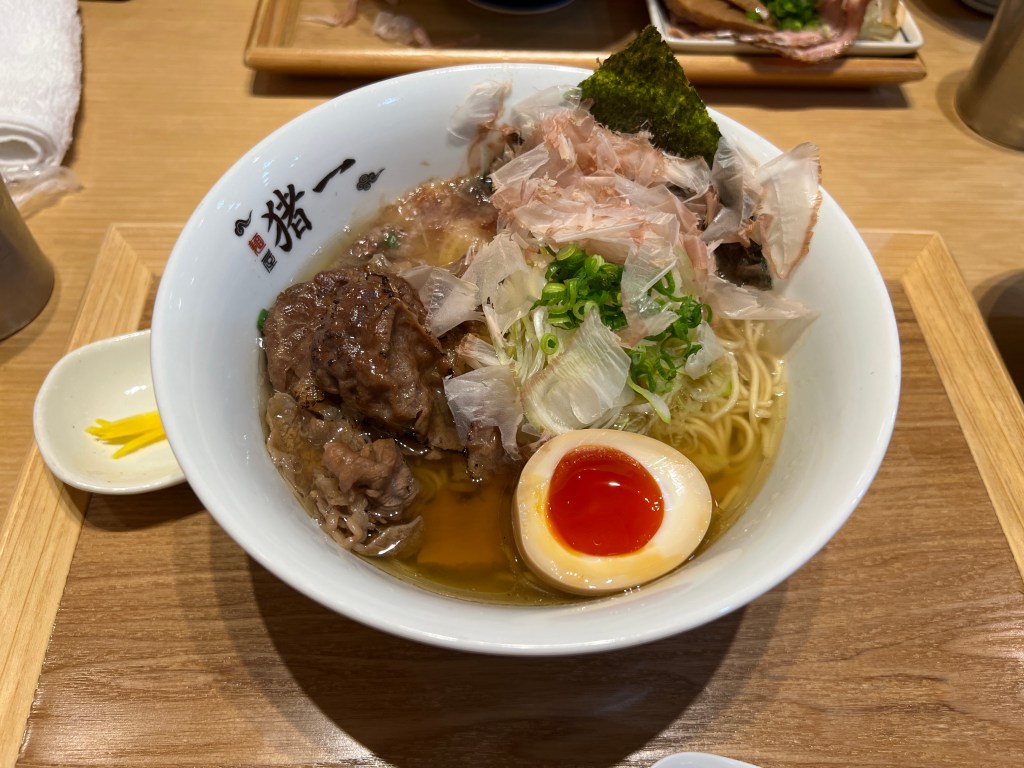
The next day was rainy, so we used it to reset before heading to Tokyo. We slept in and walked to a bakery for breakfast. Our main goal was to eat ramen from a restaurant that constantly had a long line. Menya Inoichi opened at 5pm for dinner service, and we walked over and were in line at the door at 4:15. We were the first people, but by the time they opened the doors, the line was 20 people long. I have to say, the wait was WELL worth it. This was my favorite ramen of our whole trip. I had the Wagyu beef ramen, and it was incredible.
On our way to Tokyo, we had lunch with one of my husband’s friends from college who lived in Japan. It was so great to see him, and we enjoyed a wonderful teppanyaki lunch near the Kyoto station.
Tokyo, April 8-13
On our first day in Tokyo, we spent our time exploring Akihabara. We stopped by various shops and arcades that caught our interest and loved the prize machines and action figures. One store that stood out was Culzone, where we found some amazing anime figures such as Naruto, Dragonball, Attack on Titan, and Final Fantasy. We knew we would be buying a lot, so we saved suitcase space and Tokyo for last.
The next day, we visited Meiji Shrine, basically a garden walk in the heart of the city. The trees provided a pleasant shade, which was much needed during the hot weather. Later in the day, we went to teamLab Planets Tokyo, an interactive art museum with various exhibits that offer a multi-sensory experience. My favorite exhibits were the LED lightroom and the koi pond. It’s important to note that tickets and reservations are to be purchased in advance, so plan accordingly for this attraction. Their website explains it better than I can, so see the link above for more information about teamLab Planets.
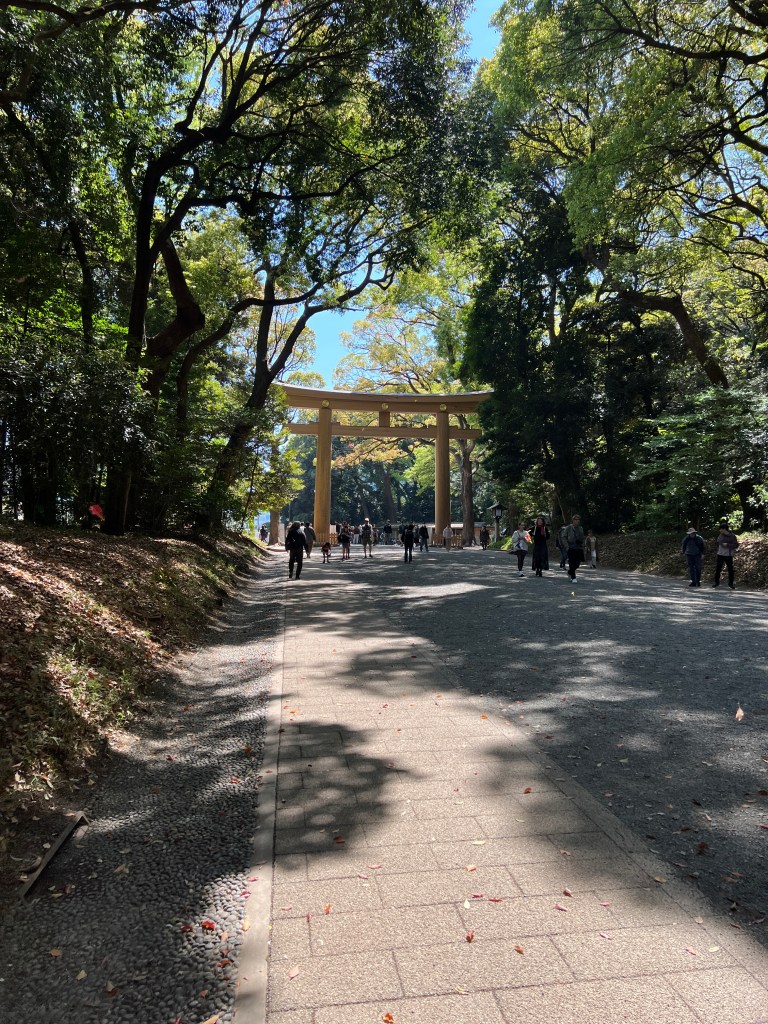
Tokyo has so much to do and see, and we just bounced around at whatever interested us. A few things we did: visited the Hachiko statue, shopped at the Nintendo store, shopped at the Pokemon store, had dinner with Daniel’s friend from college, walked to Ueno Park, and shopped at Shibuya Scramble. We tried to get tickets to Tokyo Skytree but weren’t able to make the available timeslots work. I’d recommend buying the tickets in advance if you have an idea of your itinerary.
One attraction I would recommend is the Shinjuku National Garden. It was surprisingly beautiful and peaceful. I was expecting “just another garden,” but it really was so much more than that. You can spend as long as you’d like in the park walking on the paths and sitting on the benches.
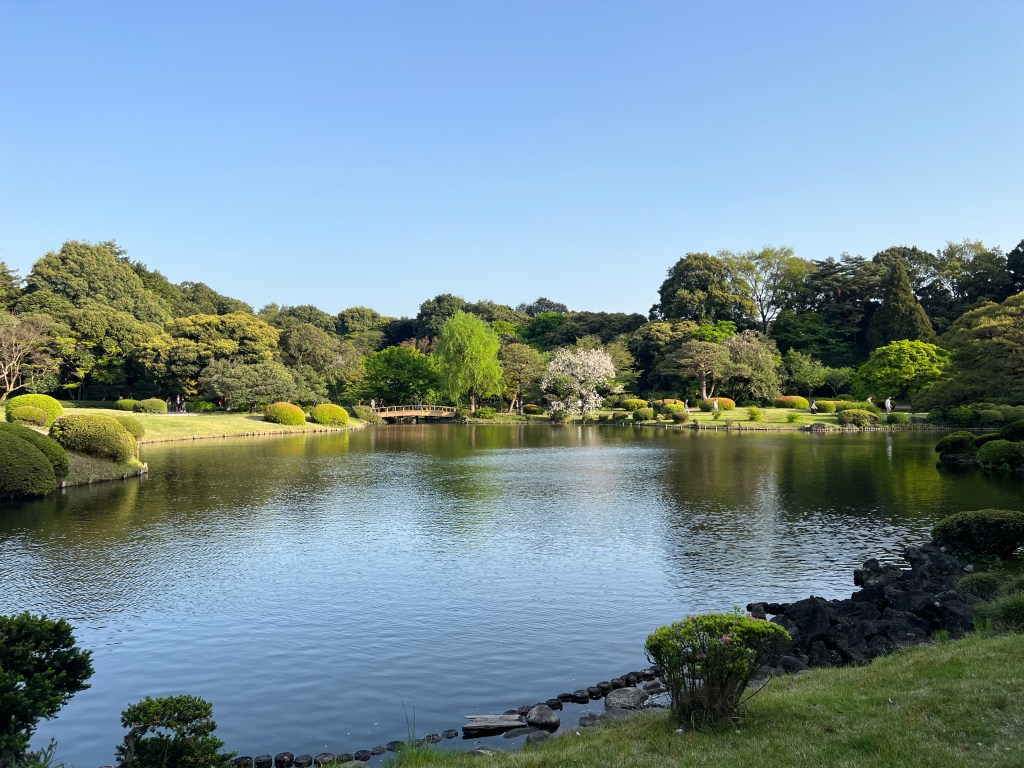
Tokyo offers no shortage of activities and sightseeing opportunities. It’s a huge city that you could spend an entire trip exploring.
Reminiscing on the memories and photos while writing this post made me long to return! We had an amazing vacation in Japan, and I can’t wait to return one day. Let me know your favorite things to do in Japan in the comments.


 Hanna's Travel Log
Leave a comment